Mary Jo Assi, Director of Nursing Practice at the American Nurses Association

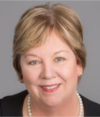 This week, hosts Mark Masselli and Margaret Flinter speak with Mary Jo Assi, PhD, Director of Nursing Practice and Work Environment at the American Nurses Association which represents the nation’s 3.4 million nurses. They discuss the expanding scope of the nursing work force in the ACA era, as well as the organization’s current focus on workforce safety.
Mary Jo Assi – American Nurses Association
Mark Masselli: This is Conversations on Healthcare , I am Mark Masselli.
Margaret Flinter: And I am Margaret Flinter.
Mark Masselli: Well Margaret there is more amount ing evidence linking the zika virus
with birth defe cts in newborns as well as neurological disorders in adults. And concern
is mounting in this country ahead of the warmer months when the mosquitoes could be
a problem here.
Margaret Flinter: And it's partly because of the recent evidence gathered from p regnant
women in the US who were exposed to zika while traveling to the affected regions.
Certainly there has been reports of several babies who were born healthy but also
several women who suffered miscarriages , one woman who gave birth to a baby with
microcephaly which is the birth defect that we are now associating with exposure to the
virus so just tremendous concern everywhere. And I think we need to remember in this
one the United States is not in isolation and I think the United States is trying to work
cooperatively with all of the other countries. This is a human problem not a national
problem.
Mark Masselli: But they are taking all precautions ahead of time , each state is expected
to have its own plan of action to reduce the threat.
Margare t Flinter: And when public health threats like zika emerge, the healthcare
community has to be prepared and that means everybody , a nd often it's nurses at the
frontline of that care . And nursing is the topic that our guest today is in expert in, Dr.
Mary Jo Assi is Director of Nursing Practice and Work Environment at the American
Nurses Association.
Mark Masselli: And she will be talking about their efforts to accelerate the pace of
training and education to help nurses best serve the growing needs of t he healthcare
community in the 21st century.
Margaret Flinter : And Lori Robertson will be stop ping by, the Managing Editor of
FactCheck.org . She is always on the hunt for misstatements spoken about health
policy in the public domain , b ut no matter what the topic , you can hear all of our shows
by going to chcradio.com.
Mark Masselli: And as always if you have comments , please email us at
[email protected] or find us on Facebook or Twitter ; we love hearing from you.
Mary Jo Assi – American Nurses Association
Margaret Flinter: Now w e will get to our interview with Dr. Mary Jo Assi in just a
moment.
Mark Masselli: But first here is our producer Marianne O'Hare with this week's headline
news.
(Music)
Marianne O'Hare: I am Marianne O'Hare with these healthcare headlines. President
Obama has picked to fill the seat left vacant on the Supreme Court h as had some
experience health legislation Merrick Garland , Chief Justice for the US Court of Appeals
in the District of Columbia , Garland was approved for his current position with a
bipartisan majority in the senate. Garland considered a moderate [ PH ] he has presided
over several health related issues. Garland previously served as a federal prosecutor
under the Bush Administration and has been known to work well across party lines.
The CBC has released new guidelines for prescribing opioids to patients the opioid
addiction crisis has reached epidemic proportions, 47,000 overdose deaths in 2014
alone. They are now recommending frontline clinicians to first prescribing non - opioid
medications for pain. Centers for Disease Control and Prevention urging pri mary care
doctors to try physical therapy, exercise and over - the - counter pain meds before turning
to stronger painkillers for chronic pain and clinicians should only prescribe narcotics as
a last resort, starting only with three days prescription. These r ecommendations are
merely voluntary at this point.
More evidence linking the zika virus to birth defects in babies born to women exposed
while pregnant, a study reported in the Journal Lancet looked at pregnancy data from
French Polynesia where there was an earlier outbreak and found higher rates of babies
born with microcephaly in that population , the Lancet study support ed the World Health
Organization’s warning for pregnant women to avoid becoming infected and to take
necessary precautions.
Meanwhile a US vaccine developed to combat dengue fever another mosquito borne
virus has proven a 100% effective in clinical trials, more trials are underway. Fluoride
treatments is gaining traction [PH] in adult dentistry as well, clinicians finding the
treatment served do increase oral cavity protections that guard against plaque build up
and acids in the mouth that break down enamel over time, no cavities, no drill, no
problem.
And trying to quit smoking, a recent study shows going cold turkey maybe the easiest
route to getting there. A study of several thousands of smokers in England showed that
while both those going cold turkey and those slowly winning off their tobacco habit
received the patch and smoking cessation counseling, those who went cold turkey were
Mary Jo Assi – American Nurses Association
more likely to be smoke free after six months. The finding suggesting the notion of
quitting once and for all is enhanced by picking a quit day and just doing it. I am
Marianne O'Hare with these healthcare headlines.
(Music)
Mark Masselli: We are speaking today with Dr. Mary Jo Assi, Director of Nursing
Practice and Work Environment at the American Nurses Association an organization
dedicated to advancing the interest and the professional environment for the nation’ s
3.4 million registered nurses. Dr. Assi previously served as the Director the
Professional Practice and Magnet Programs Director f or the Virginia Commonwealth
University Health System and was the Director of Health in research at The Valley
Health Syste m. Dr. Assi is a member of Virginia Nurses Association and is a graduate
of Pace University Family Nurse Practitioner Program . She earned her Doctorate of
Nurse Practice at George Washington University. Dr. Assi , welcome to Conversations
on Healthcare
Dr. Mary Jo Assi: Well thank you very much for having me today.
Mark Masselli: Yeah. You know Mary Jo your organization was founded in the late
1800s at the time to advance nursing protocols for treating American soldiers . And
during the past century the American Nurse Association has merit [PH] the trajectory of
the growth of the profession itself . And your organization now advocates for some three
and a half million nursing professionals working across multiple disciplines, I wonder if
you can tell our listeners more about the mission and the full scope of the work being
undertaken at the ANA.
Dr. Mary Jo Assi: So t he American Nursing Association represents nation’s 3.4 million
registered nurses and encompasses the credentialing , philanth ropy, research,
leadership, advocacy, policy and professional development, also houses the nursing
professions code of ethics as well as foundational documents for scope and standard s
of practice. The American Nurses Association has year - long campaign on the Culture
of Safety that really advocates safety for both patients and for nurses and healthcare
professionals. Our foundation, the American Nurses Foundation is the charitable arm
and really looks to use charitable contributions and research to advance the profession
of nursing.
The American Nurses Credentialing Center is the third part of the enterprise , looks at
our accreditation program processes , providing global credentialing for organizations
that offer high quality continuing nursing education p rograms the pathway to excellence
program, credentials hospital and long term care facilities and the ANCC’s Magnet
Mary Jo Assi – American Nurses Association
Recognition Program is viewed around the world as the ultimate field for quality and
confidence, it's a gold standard really.
Margaret Flin ter: Well Mary Jo, you and your colleagues in the ANA are of course at
the heart of what is going on is cutting edge and innovative and we were also delighted
during the Affordable Care Act to see the President of ANA regularly at the table, at the
Whiteh ouse and really contributing. So here we are, we have millions more insured
Americans seeking care which is a good thing, we have millions more people aging into
Medicare and we certainly have an unbelievable expansion of technology and things
that requir e an ever increasing complexity of preparations so that we can provide the
care that’s required. But I am not sure that the American public fully understands the
evolving role of the nurse in the 21st century healthcare system, so maybe talk with us
just a little bit about how you and your colleagues at ANA and in the academy envision
that role of nursing in this new world of healthcare.
Dr. Mary Jo Assi: So we know that nurses are the most trusted profession in American
and the largest health profession in American. Nurses spend the most time with
patients and their families; 24 x 7, 7 days a week . And although there is overlap with
other health professionals, there is a whole realm of knowledge , a distinct bodies’
knowledge and expertise t hat nurses have in a unique way that they bring to this whole
healthcare team.
Nurses really had been moving from functional and perhaps more task - oriented doers,
the strategic partners and leaders in the healthcare team . And one thing that I would
say i s there is no question we are seeing greater numbers of doctoral ly prepared nurses
entering for course today, do impart to recommendations from the IOM to increase BSN
prepared nurses to 80% of the nursing workforce by 2020 and impart by the American
Nurse s Credentialing Center Magnet Standards which requires all managers to be BSN
prepared.
And so it is becoming more complex, it is a more complex healthcare environment and
those requirements require nurses to have the level of education and preparation th at
we are discussing. I will say that the American Nurses Association has worked closely
and we continue to work closely with organizations, other professionals nursing and
healthcare focused organizations and consumer organizations and many others. One
in particular is the organization of the associate degree nurses with developed
recommendations with academic progression [PH] of nurses based on a variety of
models that exists today.
Mary Jo Assi – American Nurses Association
We are also aware that the care is transitioning from the traditional in - patient hospital
centric model of care that many of us had grown up in, to care in the ambulatory
community settings. And so the continuum of care becomes increasingly important as a
focus area. There is an immediate need to redesign care models with the ambulatory
settings as failure [PH] in more complex patients have been treated outside of the
hospital setting . And registered nurses we know play a critical role in ensuring that this
transition of care will be safe for patient. Nurses historically you know have really spend
that spectrum in so many different roles in so many important ways but we must ensure
that nurses and registered nurses continue to be available to patients across that
continuum of care with expertise that they provide.
Mark Ma sselli: You know Mary Jo you mentioned the Institute of Medicine’s
groundbreaking report, the future of nursing calling as you said for expanding the scope
of a nurse education as well as advocating for nurse professionals to practice at their
highest lev el of training. And I wonder if you could share with our listeners your thought
about what a milestone that report was and what the ANA is doing to help advance
those recommendations.
Dr. Mary Jo Assi: Yeah. The Institute of Medicine’ s report and recommendations did
quite a lot to really focus beyond the nursing profession, even the healthcare profession
to what is happening in healthcare today and nursing’s important role in that. And so
some of the areas that the IOM report covered includes scope of practice , to make sure
that registered nurses and advanced practice registered nurses both are working to
their full scope of practice.
And we know historically and as a family nurse practitioner I can say and experience
that although we have research that over and over again you know supports the safety
and advocacy of the care rendered by advance practice registered nurses , we continue
to you know kind of hit challenges and barriers in that regard. Really we are looking for
you know a day in the future where independent practice just routine and kind of
embedded into our healthcare culture and we believe that it will be the best possible
scenario for all of our citizens in the US.
The scope of practice also extends to the registered nu rse and so right now the
American Nurses Association has been conducting a professional issues panel on
[ Inaudible 00:11:52 ] to practice to again make sure that registered nurses are practicing
to the full extent of their education, at the institutional st ate and federal level. The
American Nurses Association is an important partner in the Coalition for Patients’ Rights
including the Home Health Care Planning and Improvement Act and the Improving
Mary Jo Assi – American Nurses Association
Veterans Access to Quality Health Care Act and wanting to mo ve together towards that
well - set vision of the future of best care for our patients.
Margaret Flinter: I would like to shift a little bit perhaps to some of the research that we
now have available and the links between the type of health professional providing care
and the outcome of care for the people to whom it's provided. And I know you have
recently shared some compelling data on the link between the preparation of nursing
professionals and patient outcomes, maybe you could share some of that with our
listeners and what does that mean in terms of the potential for continually improving
patient outcomes?
Dr. Mary Jo Assi: So researches have demonstrated a significant relationship between
nursing education and impro ved patient outcome, a seminal study by Linda Aiken in
2003 demonstrated the relationship between nursing education and patient mortality
you know basically she was able to demonstrate in the large scale study that 91,000
patients’ deaths were seen with th e workforce with the 20% BSN prepared nurses which
was reduced to 67,000 patients’ deaths when BSN prepared nurses comprised 50% or
more of the hospital workforce.
And another study by Blegen and Goode in 2009 , these researchers found that lower
r ates of heart failure mortality, fewer hospital acquired pressure ulcers, lower rates of
failure to rescue and shorter hospital ization in organizations with the higher proportion
of BSN were seen. So the Institute of Medicine and others looked at that res earch to
continue to advance the academic preparation of our nursing workforce. Since the year
2000, new graduate non - BSN prepared nurses were 60% of the workforce compared to
40% BSN prepared nurses. And we are now graduating to 45% BSN nurses. So we
a re moving in the right direction that way to meet that IOM goal of 80% doctorally
prepared n urses by 2020.
Mark Masselli: We are speaking today with Dr. Mary Jo Assi Director of Nursing
Practice and Work Environment at the American Nurses Association for the nation’s 3.4
million registered nurses. Mary Jo nursing has always been the high touched discipline
within the medical profession, but institutionally, how do you envision the training and
educational models changing to adapt to the new high - tech rea lity without sacrificing the
high - touched qualities essential for the nursing profession.
Dr. Mary Jo Assi: So one of the things that is so important to the nursing profession is
that ability to connect with patients and people and the community wherever they are
providing care that makes that human connection so important to how they are
partnering for better health that nurses are caring profession that they really provide
Mary Jo Assi – American Nurses Association
care in a way that has that human touch. But the real challenge we see is that w e are in
a very high - tech environment , I will say that that has been with us for many number of
years . And so as you go back as the intensive care units started to really form up and
we started to see much more reliance on technology in healthcare from everywhere
from the operating room to the intensive care unit, Emergency Departments , technology
is with us to stay. Nurses do need to be highly skilled that advancement of educations
plays largely into that to focus on both the tech and the touch in their academic
preparation. And once they go beyond that into nurse residency programs and into
orientation progr ams as new nurses and beyond, to be able to maintain that confidence
with the technology that they need to use to r ea l l y provide the best care.
Margaret Flinter: Well Mary Jo I think it's obvious there has just been such an explosion
of knowledge for a ll professionals really but there has also been that explosion in the
demands on practice that’s led to the generation of the nurse residency programs for
new RNs in the hospital, you have so many initiatives going on at ANALYSIS, maybe
tell us about some of the innovations and it's kind of the bold gestures that you are
supporting at the American Nurses Association that you think really just significantly
move us forward into the future.
Dr. Mary Jo Assi: So some of those really kind of have to do with o ur professional
issues panels everything from nurse fatigue to looking at workplace violence and
instability in the workplace to understand better you know wh a t are the ways that we
can mitigate that work and we have don e substantial work in the areas of s taffing, nurse
staffing. We completed in November staffing paper and the associations between nurse
staffing and quality and patients ’ safety outcomes and nurse outcomes , care
coordination is high on our radar level in terms of being able to articulate th at nurses
have really traditionally always done that role , and we have done it very well . And that
continues to be needing emphasized and really focused upon in terms of what that’s
going to look like in new healthcare delivery systems and the critical role of the nurse in
that work.
Mark Masselli: Mary Jo when I think about nurses, I think the word that comes to mind
is safety and I want to talk a little bit about the growing movement of safety in the
h ealthcare arena. We know that somewhere between a hundred thousand to as many
of a quarter million Americans lose their life through medical errors . But a recent guest
on our show Dr. Gandhi of the National Patient Safety Foundation also pointed to the
g rowing need to protect medical professionals from harm as well, maybe tell our
listeners about the Culture of Safety for your organization this year and what you are
planning to do to address this important issue.
Mary Jo Assi – American Nurses Association
Dr. Mary Jo Assi: So the year [PH] Cultu re of Safety really is a campaign , it really has
to become a cultural transformation. We look at everything from nurse fatigue and the
impact on both the nurse and the patient , workplace violence and instability again what
happens with an unhealthy work e nvironment it is going to impact patient care it's going
to impact patient outcome. The American Nurses Association is providing every month
2016 a large body of information toolkit that an organization or individual could bring
forward to help to move cu ltural transformation forward in the workplace.
Margaret Flinter: We cannot pick up a newspaper without addressing the opioid
epidemic contributor to so many deaths of people of all ages and both in the policy room
and around the water cooler at the ANA there must be a law of discussions going on
about how nursing can contribute to stopping this epidemic and I wonder if you would
like to say a few words about that.
Dr. Mary Jo Assi: We have actually dedicated you know kind of workgroup right now
that’s specifically focusing on the work that is coming out of you know Washington DC
and across the nation. And so we really look at a couple of different areas when we
look at this and one is, what is the education healthcare professional set is needed to
avoid you know issues with opioid addiction or over - prescribing. And then what
happens if we see addiction and what is the treatment after that, the othe r thing is we
need to balance that with a lot of work that’s been done in the area of effective pain
management. So we want to be sure that as we coin [PH] this issue we are keeping
that again high on our radar to be sure that we are not taking that into consideration.
And so that can be anything from looking at interventions that are non - opioid in nature,
again to be effective use of opioids were indicated and so we are looking at that higher
350 [PH] degree spectrum as we move forward to develop our rec ommendations.
Mark Masselli: We have been speaking today with Dr. Mary Jo Assi, Director of Nursing
Practice and Work Environment at the American Nurses Association. You can learn
more about their work by going to nursingworld.org. Mary Jo, thank you s o much for
joining us on Conversations on Healthcare today.
Dr. Mary Jo Assi: My pleasure, thank you for having me.
(Music)
Mark Masselli: At Conversations on Healthcare , we want our audience to be truly in the
know when it comes to the facts about healthcare reform and policy. Lori Robertson is
an award - winning journalist and managing editor of FactCheck.org , a nonpartisan,
Mary Jo Assi – American Nurses Association
nonprofit consumer advocate for voters that aim to reduce the level of deception in US
politics. Lori what have you got for us this week?
Lori Robertson: Democratic front - runner Hillary Clinton said that, she didn’t know where
her opponent – Bernie Sanders – was when I was trying to get health care legislation
passed in 19 93 and 19 94 w hen she was “standing up” against the insurance
companies . A ctually , Sanders cosponsored a single - payer health insurance bill in 1993,
and Clinton thanked him for his work on the issue that year.
Sanders, who was a me mber of the House back then, didn’t work with Clinton to pass
the administration’s overhaul of the health care system. Instead, he worked as he does
now for a single - payer system in which everyone is insured by the government.
Her comment leaves the impr ession that Sanders wasn’t doing anything to change the
healthcare system back then, and that’s not the case. In 1993, Sanders was an original
cosponsor of the American Health Security Act the legislation sought to institute a state -
based universal progra m. Back in 1993, Sanders tried to encourage Clinton to move to
single - payer but that didn’t happen when the Whitehouse backed bill was introduced in
the house in November 1993 with a 103 cosponsors, Sanders was not among them.
In 1995 Sanders said in ano ther Floor Speech pushing for single - payer that he had
disagreed with the Clinton plan. To say he was missing in 1993 from efforts to overhaul
healthcare ignores his push for a single - payer plan at the time. And that’s my fact
check for this week, I am Lori Robertson , Managing Editor of FactCheck.org.
Margaret Flinter: FactCheck.org is committed to factual accuracy from the country's
major political players and is a project of the Annenberg Public Policy Center at the
University of Pennsylvania. If you have a fact, that you would like checked, email us at
www.chcradio.com . We will have FactCheck.org's Lori Rober tson check it out for you
here on Conversations on Healthcare.
(Music)
Margaret Flinter : Each week Conversations highlights a bright idea about how to make
wellness a part of our communities and everyday lives. Tel Aviv computer scientist and
developer Oded Ben Dov has been coding since he was 6 years old and has always
been interested in hacking systems to make them better. So when this young
entrepreneur unveil the hands - free gaming system on Israeli TV, a local quadriplegic in
the viewing audience t ook notice and urged him to think about adapting this hands - free
gaming system to help quadriplegic interact with their Smartphones by using simple
head movements.
Mary Jo Assi – American Nurses Association
Oded Ben Dov : And the guy in the call said, hello my name is Giora , I can't move my
hands or legs , could you make me a phone I could use. And that really cut my ear, cut
my heart , it was a chance to apply all my tech knowledge towards the greater good.
Margaret Flinter: The two hit partner together on the project decidi ng to call the device,
Sesame Phone as in Open Sesame.
Oded Ben Dov : So gradually and iteratively we added more and more configuration
parameters to the program . So someone could opt for big head movement or very
small head movement. You could use it l ike expanded voice command s or you could
use a built in Google dictation capabilities. We really tried to make it as wide as
possible for audience.
Margaret Flinter: They say the results for participants had been nothing short of
miraculous. Ben Dov sa ys he has seen both children and adults formerly locked in by
paralysis literally come alive.
Oded Ben Dov: It's an emotional , and every user uses it differently. Someone
immediately called his wife, children you know rushed to the most popular game and
played that.
Margaret Flinter: The Sesame Phone now has hundreds of users around the Israel but
they are gathering funding to make the Smartphone software available around the world
and Ben Dov says, they have got bigger plans for developing this and other systems
that are geared to assist the handicapped community.
Oded Ben Dov: I feel there are a lot of technologies that can really be life changing for
some people but no one necessarily is working in that direction with positions well within
the special needs base and we can keep supporting and developing our current
products and offer a completely different product as we are exposed to more and more
needs.
Margaret Flinter: Sesame Phone, a simply devised hands - free interface that allows the
paralyzed and physically handicap to interact with their world through their Smartphones
using simple head movements , allowing them a new level of independence, now that’s
a bright idea.
(Music)
Mary Jo Assi – American Nurses Association
Margaret Flinter: This is Conversations on Healthcare, I am Margaret Flinter.
Mark Masselli: And I am Mark Masselli, peace and health.
Conversations on Healthcare, broadcas t from the campus of WESU at Wesleyan
University, streaming live at www.wesufm.org and brought to you by the Community
Hea lth Center.