Dr. Anna Lembke author of “Drug Dealer MD, How Doctors Were Duped, Patients Got Hooked, and Why It’s So Hard To Stop”

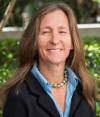 This week, hosts Mark Masselli and Margaret Flinter speak with Dr. Anna Lembke, Chief of Addiction Medicine at Stanford University School of Medicine, and author of “Drug Dealer MD, How Doctors Were Duped, Patients Got Hooked, and Why It’s So Hard To Stop.” She examines the dramatic rise in opioid prescriptions and overdoses and the role the health care industry is playing in this crisis.
Dr. Anna Lembke
Mark Masselli: This is Conversation on Healthcare, I am Mark Masselli.
Margaret Flinter: And I am Margaret Flinter.
Mark Masselli: Well, Margaret, we are still looking at some fallout from the
Republican attempt to repeal and replace ObamaCare. While the Senate failed
to get the majority to vote in favor of their Bill, there are still strategies the White
House could use to undermine the Affordable Care Act.
Margaret Flinter: Some Senators are planning to forge ahead with hearings that
are aimed at finding ways to stabilize these markets, especially in the pockets
around the country, where customers who are seeking coverage simply have no
insurers to choose from.
Mark Masselli: You know, Margaret, the insurance exchanges setup under the
Affordable Care Act are doing pretty well. The marketplaces are stabilizing in
States where their support for the Affordable Care Act, the ACA has remained
intact for the time being with Mitch McConnell’s last effort to repeal falling short of
votes.
Margaret Flint er: Well Mark, it is important to note here that the Senators, who
quickly announced that they wouldn’t support repeal, that was Senator Capito of
West Virginia, Senator Collins of Maine, said this would seriously derail efforts to
curb the opioid epidemi c, not just in their States, but around the country.
Mark Masselli: On that note, Margaret, the Center for Disease Control and
Prevention and other experts predict that the number of overdose deaths is
expected to increase this year from last year’s high of roughly 50,000.
Margaret Flinter: This is truly an unbelievable and frightening public health crisis,
Mark, with no simple solutions and no end in sight. We thought we would review
an interview we did within the past year with Dr. Anna Lembke. She is an
addiction specialist at Stanford Medical Center and she has written a very
compelling and important book on the topic Drug Dealer MDs, How doctors were
duped, patients got hooked, and why it is so hard to stop. It is a very tough look
at how opioid prescribing got so out of control.
Mark Masselli: Lori Robertson also stops by. The Managing Editor of
FactCheck.org, who is always on the hunt for misstatements spoken about health
policy in the public domain, but no matter what the topic, you can hear all of our
shows by going to www.chcradio.com .
Margaret Flinter: A nd as always if you have comments, please email us at
[email protected] or find us on Facebook or Twitter , because we love to
hear from you. And w e’ll get you our interview with Dr. Anna Lembke in just a
moment.
Dr. Anna Lembke
Mark Masselli: But first, here is our producer Marianne O’Hare with this week’s
Headline News.
Marianne O’Hare: I am Marianne O’Hare with these Healthcare Headlines. After
a seven - year odyssey to repeal and replace ObamaCare, it appears the GOP
has hit a dead end. The Republican controlled Senate plan to replace the
Affordable Care Act failed to garner enough support from all Republicans and a
follow up attempt to simply repeal the law never got off the ground either. So,
what’s next in the quest for health reform? The highly partisan Congress is likely
to have to crack the door open at least slightly to the idea of bipartisan
negotiatio n to address what needs fixing into healthcare law. Senator John
Cornyn, a Republican from Texas said he felt it was unfortunate that they might
have to start negotiating now across the aisle. He claimed democrats were
unwilling to concede structural cha llenges in the Affordable Care Act. President
Trump, who had campaigned heavily on repeal and replace of ObamaCare, has
said publicly that may be he should just let it die. Meanwhile funding for the
children’s health insurance program or CHIP is going to expire after September
th
30 . Bills to address the subsidy payments and CHIP will likely require 60 votes
for passage in the Senate. It is a barometer of how inclined Republicans and
Democrats might be to work together on these important issues. Meanwhi le
entering into the dog days of summers, there are renewed concerns across the
nation’s southern interior about the resurgence of the Zika virus and cities like
Houston are making ready; the nation’s fourth largest city has increased budgets
for mosquito control partnering with tech giants Microsoft and Google to initiate
innovative approaches to containing mosquito born illnesses. Zika infections
across Central America and the Caribbean are down significantly, about 90%,
but the risk still remains. Ther e are outbreaks being reported in the countries of
Peru and Argentina. Currently, there are about 20 vaccines for Zika in varying
stages of development. The opioid crisis has led to a rise and another health
realty; a dramatic spike in the number of babi es being born opioid dependent as
well. This rates for babies born to opioid withdrawal has increased nearly fivefold
in the U.S. and the problem is particularly acute in rural areas. Meanwhile,
Missouri has become the final State in the nation to create a prescription drug
monitoring program. Governor Eric Greitens signed an executive order aimed at
combating a scourge that’s killed more than 900 residents in the last year.
Missouri has been the lone holdout for many years. The nation’s Governors met
in Rhode Island for the annual meeting recently and held a special session on
the mounting opioid crisis. There is significant bipartisan agreement that a
national agenda needs to be scaled up across multiple sectors to address what’s
become the leading c ause of accidental death in this country. And trying to lose
weight, well artificial sweeteners may not get you there. A study done at the
University of Manitoba found that there is no clear benefit for weight loss and
there is a potential association wi th increased weight gain, diabetes, and other
health concerns. The observation of those studies actually found a small
increase in BMI associated with the use of sweeteners. Everyday about 41% of
Dr. Anna Lembke
American adults consume some product with an artificial sw eetener in it. I am
Marianne O’Hare with these Healthcare Headlines.
Mark Masselli: We are speaking today with Dr. Anna Lembke, Chief of Addiction
Medicine and Assistant Professor at Stanford University School of Medicine, with
her primary research focu sed on why patients become addicted to prescription
drugs. Dr. Lembke has published over 50 peer review articles and publications
such as the New England Journal of Medicine and the Journal of the American
Medical Association. She is the author of Drug D ealer MD, how doctors were
duped, patient got hooked, and why it is so hard to stop. She earned her
undergrad degree at Yale and her medical degree from Stanford University
School of Medicine. Dr. Lembke, welcome to Conversations on Healthcare.
Dr. Anna Lembke : Thank you for inviting me.
Mark Masselli: Well, as you so clearly articulated we are in this midst of a
devastating public health crisis in the country, some 50,000 people a year are
dying from overdoses , which is sort of reminds me back to the days of the
Vietnam war. Your book, Drug Dealer MD takes an unflinching look at what you
see as one of the critical components of the epidemic, the dramatic rise in the
number of prescription, clinicians have written for opioids in recent years and I
am wondering if you could help your listeners understand the scope of America’s
addiction crisis.
Dr. Anna Lembke : Yeah, and I am glad you referenced the Vietnam era,
because that was the opioid epidemic just prior to this one and this one certainly
surpass es that in scope and devastation. Drug overdoses today are the leading
cause of accidental death in this country surpassing deaths due to motor vehicle
accidents fo r the first time in our history. And of the 50,000 annual drug related
deaths, about half of those involve some kind of prescription drug. There has
been a quadrupling of the number of deaths since 1999 and along with that a
quadrupling in the number of prescriptions doctors have written for opioid
painkillers, so what we have here is really a very clear epidemic of over
prescribing just to get people perspective on this is that the U.S. consumes about
90% of the world’s prescription opioids, we are constituting only about 4% of the
world’s population.
Mark Masselli: Amazing.
Margaret Flinte r: Well, Dr. Lembke , I think it is important for our listeners to may
be start a little bit at the beginning of what we now understand about addiction
from thinking of this as a moral failure or understanding just how complex the
medical behavioral and ps ychiatric underpinnings are, what’s the description of
addiction, the diagnostic description if you will and what does this mean within
the larger context of healthcare and how we address it?
Dr. Anna Lembke
Dr. Anna Lembke : Probably, the best way to describe the diseas e of addiction is
to tell you an anecdote about a patient of mine, who called me in desperation one
day and said “you know, Dr. Lembke, I am surrounded by empty vodka bottles. I
cannot stop drinking, can you help me?” This is somebody who fully recognize d
that she had the disease of addiction to alcohol. She clearly could describe her
situation, but she was unable to stop drinking without help. In order to get her
help, I had to tell her to go to her nearest emergency room and tell them that she
was sui cidal and she said, but Dr. Lembke, I am not suicidal, that’s why I am
calling you, I want to live and I said to her, I know that, but if you go to the
emergency room and tell that you want to be admitted for alcohol detox, they
won’t admit you, because in surance companies don’t pay for that, so you have
tell them that you are suicidal and then they will admit you and I will treat your
alcohol detox. So what we have here is a huge - huge medical condition, public
health problem and yet we don’t have a way to get people ready access and
ready treatment paid for by their insurance company, so instead what are we
doing, we are spending 400 - plus billion dollars per year paying for the
downstream effects of addiction.
Mark Masselli: In your book, Drug Dealer MD, you focus on what you call
prescription drugs as the new gateway drugs and I am wondering what role the
pharmaceutical industry has played in this latest chapter of the drug addiction
scenario and well meaning docto rs were duped into complicity.
Dr. Anna Lembke: Right, so my title, Drug Dealer MD is you know intentionally
provocative, but also a little bit misleading, because I really do feel that this
epidemic is driven primarily not by pill mill doctors exchanging prescription for
cash, but by well int entioned compassionate doctors and the way that doctors
are really duped is that they were misled to believe that the evidence supported
the use of opioids in the treatment of chronic pain and we now know that there is
essentially no evidence that opioids when prescribed long - term helps chronic
pain. The reason for that is because people develop tolerance due to the
process called neuroadaptation and the opioid just simply don’t work anymore.
So what happened in the 1908s is some thought leaders within me dicine
suggested that we should more liberally prescribe opioid. Out of good intentions
came a bad idea. It was essentially the pharmaceutical industry; what they did
was more like a Trojan Horse approach and they infiltrated big medicine by
making all k inds of partnerships with the Joint Commission, with the FDA,
funneling money into these organizations, into pain societies that opioids work
long - term for pain, even though there was really scant evidence. In this era of so
called evidence - based medicine , there is enormous pressure on doctors to
practice medicine supported by the evidence and they were told that the
evidence supported using opioid chronically for pain even though that wasn’t
true. So it got to be a kind of a group think and then of cours e there were many
factors within healthcare delivery that made using opioids to treat complex
problems like pain an easy solution.
Dr. Anna Lembke
Margaret Flinter: I appreciate that you acknowledge the clinicians are motivated
to do right by their patients, but there i s this conundrum where dramatic lack of
training in this area of understanding and assessing, and diagnosing and
managing and treating chronic pain, what are we going to do about this to help
both clinicians and consumers move forward to get a better handl e on how we
manage chronic pain going forward?
Dr. Anna Lembke : I do feel positive that that we are about to make a big shift in
medical school education, I was recently a part of a White House Symposium,
where lot of educators from around the country ta lking about how we can revamp
the medical school curriculum to better address the issue of addiction, but we
currently have a terrible situation in which the visions learn almost nothing in
most medical schools on how to target and treat addiction and much of their pain
education emphasizes getting patients on opioids and let me tell you it is a lot
easier to get them on than to get off. I don’t think education alone is going to be
enough. We really have to restructure some of the incentives within the
he althcare delivery system.
Mark Masselli: We are speaking today with Dr. Anna Lembke , Chief of Addiction
Medicine at Stanford University School of Medicine. She is author of Drug
Dealer MD. Dr. Lembke pulled a thread a little on this notion of solutions and
one of the things that we do at our Weitzman Institute is that we have a nation
wide pain ECHO. Physicians and nurse practitioners, other providers are able to
present cases to addiction experts. Psychiatry, nursing, along with acupuncture
and the li ke; what other tools are you seeing out there that the practicing provider
might be able to use because they just don’t have the right tools?
Dr. Anna Lembke : Fortunately, there is tremendous outreach now, the ECHO
program is a great example of how to ta p into addiction experts to learn how to
handle these complex patients. There is a push in some States to get doctors to
register and even access their prescription drug monitoring program, which is a
good first step. Again, what concerns me though is be yond education, we need
to actually make it economically feasible in awarding for healthcare systems and
individuals doctors to pursue these efforts. So, you talk about how you have a
team - based approach. You’ve got the, you know the orthopedic surgeon w ith the
psychiatrist and a social worker and a primary care doctor, fantastic, but I would
ask you, do you get reimbursed for that time?
Mark Masselli: No.
Dr. Anna Lembke: Why? You don’t, so you know it is out of the goodness of
your heart and you ar e aware of the public health crisis and that’s fantastic, but
we really need to restructure the reimbursement strategy so that we incentivize
doctors to do the right thing, because otherwise you are not going to get systemic
reform.
Dr. Anna Lembke
Margaret Flinter: Dr. Lembke, it’s really just within the last decade that those of
us on the frontlines of primary care have been asked to play an active role in the
treatment of drug dependency, particularly medication - assisted treatments,
Suboxone being the most common one. Talk about the use of medical
interventions for addiction management if you will.
Dr. Anna Lembke : Yes, I think it’s fascinating that primary care doctors are
expected to solve this problem, like as if they didn’t have enough to do already.
Alright, s o let’s talk about Suboxone first; I can. I have also life changing success
with Suboxone and the evidence is overwhelming that it is very effective, not just
to reduce; however, I am very concerned that this is kind of a typical knee jerk
reaction, yet o ne more pill that we are prescribing and although Suboxone is
effective, I don’t think it’s as effective as it could be if it were combined with
psychosocial intervention, then it really should be. There are lots of different
interventions that work for t he treatment of addiction. You know, individual
therapy, group therapy, family therapy, there are other medications beside s
Suboxone for opioid addiction namely something called naltrexone, which blocks
the mu - opioid receptor and so it can also, in those individuals they report actual
decreased craving, so that’s a fascinating thing to note and then there are also a
lot of community level interventions that are very helpful.
Mark Masselli: You know you have pharmaceutical industry, which is developing
an d promoting drugs and you have the FDA, which is empowered to really review
drugs to improve the public health and protecting consumers and something
went wrong here. What would you say are the strengths and weaknesses in that
relationship between the FDA and the pharmaceutical industry and what could be
a better process?
Dr. Anna Lembke : So the FDA was essentially asleep at the wheel; lot of
prescription opioid crisis was unfolding even as people were dying of prescription
opioid overdoses, they were do ing very little to prevent pharma from misbranding
opioids as non - addictive. In addition to approving new drugs, it is to police these
drugs after they are out there and make sure there aren’t new adverse
consequences that come up and they really didn’t d o this, even as for example
Purdue Pharma, the makers of OxyContin were advertising that less than 1% of
patients would get addicted. The FDA did nothing about it. The other thing
about the FDA is they have a very compromised relationship with pharmacy i n
which the pharmaceutical industry advises them on how to devise t heir studies to
approve opioid. In the 1990s, the FDA changed their approval process for new
opioids to a study designed called enriched enrollment. Essentially it’s a way of
making it ea sier for new opioids to get approved and they did this, you know, in
collusion at large meetings funded by big pharma, so they rescheduled the
hydrocodone products to Schedule II to make it harder for doctors prescribing
and that was a step forward, but es sentially in 2013, they approved Zohydro,
which is a long - acting formulation of hydrocodone. The FDA is now strongly
promoting what they call abuse deterrent alternatives of opioids. So what does
Dr. Anna Lembke
this mean? Formulations of opioids that are hard to crush and snort or crush and
inject, however there is no evidence that abuse deterrent formulations mitigate
the risk of addiction because the most common way to misuse opioids is to just
ingest them as you normally would, right. A good example of a recent abu se
deterrent formulation Opana released in 2011 was supposedly an abuse
deterrent formulation of an opioid and it was at the Center of the HIV epidemic in
Indiana. The FDA and pharmaceutical industry should not be cooperating on the
level that they are co operating. The FDA has to do a better job policing. They
shouldn’t be approving opioids. We have enough.
Margaret Flinter: Well, Dr. Lembkin, I am sure you’ve been very engaged in
following policies that have been discussed. What should we and our li steners
look forward to possibly seeing in terms of legislative or policy changes?
Dr. Anna Lembke: Well, as you know, Obama pledged 1.1 billion to try to fight
opioid addiction. A lot of that has gone into increasing access to Suboxone
prescribing, whi ch is great, because as I said before, it works, but I would love to
see some of those monies go towards psychosocial interventions and actually
paying doctors to spend time helping their patients get off of opioids, which is a
long - term and laborious proc ess, as well as providing non - opioid alternatives to
pain from psychotherapy to acupuncture to trigger point massage, whatever it is.
You know, if you are going to ask primary care doctors to take care of not just
diabetes, hypertension, and heart disease , but also addiction, homelessness,
and unemployment, that you give them the resources to do that.
Mark Masselli: We have been speaking today with Dr. Anna Lembke, Chief of
Addiction Medicine at Stanford University School of Medicine and author of Drug
D ealer MD, how doctors were duped, patients got hooked, and why it so hard to
stop. You could learn more about her work by going to med.stanford.edu or you
can follow her on Twitter@stanfordmed or at drugdelaermd. Dr. Lembke, thank
you so much for joining us on Conversations on Healthcare today.
Dr. Anna Lembke: Thank you for having me.
Mark Masselli: At Conversations on Healthcare, we want our audience to be
truly in the know when it comes to the facts about healthcare reform and policy,
Lori Robertso n is an award - winning journalist and Managing Editor of
FactCheck.org, a non - partisan, nonprofit consumer advocate for voters that aim
to reduce the level of deception in U.S. politics. Lori, what have you got for us
this week?
Lori Robertson: Republica ns Senators revived their Healthcare Bill, the Better
Care Reconciliation Act, but that wasn’t enough to garner the support needed to
pass the legislation. What were some of the changes to the latest effort to repeal
and replace the Affordable Care Act? The revised Senate Bill would have
enabled insurers to sell plans on the State or Federal marketplaces to also sell
Dr. Anna Lembke
noncompliant plan on the individual market outside of those marketplaces. A
noncompliant plan could deny coverage or charge more based on h ealth status
and they wouldn’t have to meet minimum benefit requirements or a limit on out of
pocket cost sharing. Compliant plans would still be governed by those rules on
the marketplaces and they’d still have to offer coverage regardless of preexisting
condition. They also would have received funding for several years to help lower
cost since policy holders with high health cost would likely choose those
compliant plans. The revised bill still would institute a per capita cap or a block
grant option f or Medicaid funding, but it would have allowed the cap to be lifted in
areas where public emergencies are declared. Unlike the first Senate Bill and
the house GOP bill, the revised bill would have kept the ACA’s 0.9% additional
Medicare tax and 3.8% tax o n investment income for high income earners. The
nonpartisan Congressional budget office hadn’t yet released an analysis of the
revived legislation when it became clear that Senate Republicans didn’t have to
vote to pass it. Senate majority leader Mitch McConnell said he would instead
bring a vote on a Bill that partially repealed the ACA with a two - year delay. A
replacement would have to be worked out separately, but enough Republican
Senators have come out against the partial repeal to block that effor t too. And
that’s my Factcheck for this week. I am Lori Robertson, Managing Editor of
FactCheck.org.
Margaret Flinter: FactCheck .org is committed to factual accuracy from the
country’s major political players and is a project of the Annenberg Public Po licy
Center at the University of Pennsylvania. If you have a fact that you would like
checked, email us at www.chcradio.com , we will have FactCheck.org ’s , Lori
Robertson, check it out for you, here on Conversations on Healthcare.
Margaret Flinter: Ea ch week conversations highlights a bright idea about how to
make wellness a part of our communities into everyday lives. If music soothes
the savage beast, the question they want to answer at the Sync Project is how
ex actly. There are lots of anecdotal study supporting music’s ability to trigger
memory or boost endurance or focus, but virtually nothing is known about how
music truly impacts our physiological and neurological state. This is the question
that intrigued scientist Ketki Karanam, a Systems Biology PhD from Harvard,
who wondered, how could music be scientifically harnessed as a powerful
precision medicine tool, they formed the Sync Project with a cross - section of
neuroscientists, biologists, audio engineers, and even some rock stars like Peter
Gabriel and started by using artificial intelligence systems to analyze existing
play lists that purports or promote relaxation induced sleep, enhanced focus, or
athletic performance.
Ketki Karanam : Once we have this set of songs that our machine learning
algorithms predict to be effective for a specific activity, we can then draw on
studies using these devices like your smart watches, your activity trackers, and
actually look at how effective indeed it is, that song f or that focus.
Dr. Anna Lembke
Margaret Flinter: Karanam and her colleagues note that most of us self - medicate
with music already, so why not harness this ubiquitous tool that’s available to all
of us and develop strategies and systems that might replace pharmacological
interventions with musical ones. The Sync Project is seeking a million volunteers
to offer their music suggestions.
Ketki Karanam : We are literally walking around with you know 14 million songs
in our pocket every single day, so we saw a great opportun ity and really being
able to understand how music was affecting us, both our psychological health, as
well as the physiology.
Margaret Flinter: Karanam and her team see vast potential for reducing reliance
on drugs by crafting personalized music interven tions in the management of a
variety of complex conditions, such as pain management, PTSD, even
Parkinson’s disease.
Ketki Karanam : In Parkinson’s disease, patients have trouble coordinating
movements, so by playing them the right kind of music, it can b e an external
auditory support to have that’s going to help them walk more smoothly.
Margaret Flinter: The Sync Project, combining computer technology and
neuroscience and musicology to harness the healing powers inherent in music,
now that is a bright i dea.
Margaret Flinter: This is Conversations on Healthcare, I am Margaret Flinter.
Mark Masselli: And I am Mark Masselli, peace and health.
Conversations on Healthcare broadcast from the campus of WESU at Wesleyan
University , streaming live at wesufm. org and brought to you by the community
health center.